Aetna Shared Deductible Plan Covers Family Members on the Job
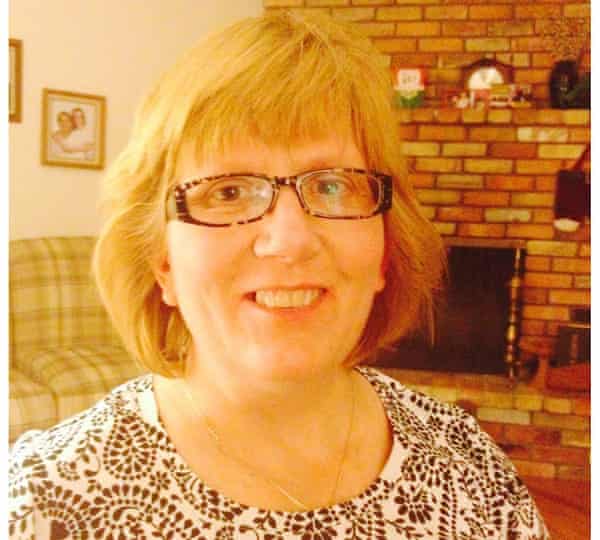
Susan Finley returned to her job at a Walmart retail store in Grand Junction, Colorado, after having to telephone call in sick because she was recovering from pneumonia.
The day she returned, the 53-year-old received her ten year associate award – and was simultaneously laid off, according to her family. She had taken off ane day beyond what is permitted by Walmart's attendance policy.
After losing her chore in May 2016, Finley besides lost her health insurance coverage and struggled to discover a new job. Three months afterward, Finley was constitute dead in her flat after avoiding going to come across a doctor for flu-similar symptoms.
"My grandparents went by to check on her, and they couldn't go into her apartment," her son Cameron Finley told the Guardian. "They got the landlord to open it upwardly, went in and found she had passed away. It came as a complete surprise to everybody. It just came out of nowhere.
"She was barely scraping by and trying non to get evicted. She gets what appears to her as a basic cold or influenza, didn't go to the medico and run a risk spending money she didn't have, and equally a consequence she passed away."
Asked about Finley losing her chore, Walmart declined to comment, proverb personnel files from 2016 had been moved offsite.
Finley is one of millions of Americans who avoid medical handling due to the costs every twelvemonth.
A December 2019 poll conducted by Gallup found 25% of Americans say they or a family member have delayed medical treatment for a serious illness due to the costs of care, and an boosted 8% study delaying medical treatment for less serious illnesses. A report conducted by the American Cancer Lodge in May 2019 found 56% of adults in America report having at least ane medical fiscal hardship, and researchers warned the trouble is likely to worsen unless activeness is taken.
Dr Robin Yabroff, lead author of the American Cancer Society written report, said terminal calendar month's Gallup poll finding that 25% of Americans were delaying care was "consistent with numerous other studies documenting that many in the U.s.a. have trouble paying medical bills".
US spends the nearly on healthcare
Despite millions of Americans delaying medical treatment due to the costs, the US even so spends the most on healthcare of whatever developed nation in the earth, while roofing fewer people and achieving worse overall health outcomes. A 2017 analysis institute the United States ranks 24th globally in achieving health goals set by the Un. In 2018, $iii.65tn was spent on healthcare in the United States, and these costs are projected to abound at an almanac rate of 5.five% over the next decade.
High healthcare costs are causing Americans to go sicker from delaying, fugitive, or stopping medical treatment.

Anamaria Markle, of Port Murray, New Jersey was diagnosed with stage three ovarian cancer in 2017. A clerk for most 20 years at the same firm, her family says her employer laid her off after the diagnosis, with one year's severance and health insurance coverage. When the insurance coverage ended, Markle struggled to pay for coverage through Cobra (a health insurance program for employees who lose their job or have a reduction in work hours), additional expenses, copays (an out-of-pocket, upfront fee for a medical service ), and medical debt non covered past insurance.
Laura Valderrama, Markle's daughter, said: "It wasn't financially sustainable to go along paying Cobra out of pocket. On summit of the premiums you still have to pay the bills. We kept getting lots of bills for surgeries, chemotherapy, all these treatments, all these bills kept coming in."
Markle decided to end receiving medical treatment due to the rise costs and debt, and died in September 2018 at the age of 52.
"My mom was constantly doing the math of treatment costs while she was on the turn down," Valderrama said. "I actually miss my mom. She shouldn't have had to brand the decision to stop her treatment based on fiscal costs."
Families 'should not have to brand these choices'
A 2009 report conducted past researchers at Harvard Medical School found 45,000 Americans die every year every bit a direct result of not having any health insurance coverage. In 2018, 27.eight meg Americans went without whatsoever wellness insurance for the entire yr.
One of those Americans was the begetter of Ashley Hudson, who died in 2002 due to an untreated liver affliction, an illness that went undiagnosed until a few weeks earlier his death. It was merely discovered when he went to the emergency room because he was unable to afford to see a physician due to lack of insurance coverage and disability to afford treatment out of pocket.
Now Hudson's mother, Sue Olvera, who works at McDonald's and has no insurance coverage, is facing similar cost barriers while struggling with kidney issues and type 2 diabetes.
"She's had pain for a long time, only she doesn't unremarkably become to the medico unless information technology gets excruciating because she tin can't beget to become," said Ashley Hudson.
The family unit is trying to raise money via GoFundMe to aid encompass the costs of Olvera's surgery to remove kidney stones earlier this year, which Olvera was expecting to be covered under a charity programme, just was denied and now is stuck with over $xl,000 in medical debt.
Healthcare is one of the most contentious issues surrounding the 2020 presidential ballot every bit Democratic candidates battle over policies to aggrandize healthcare admission and lower costs, from Bernie Sanders' medicare for all pecker which would create a authorities funded healthcare organization providing universal coverage to all Americans, while eliminating surprise medical bills, deductibles, and copays, to healthcare plans that focus on creating a public selection nether the Affordable Intendance Human action. As Democrats debate solutions to America's healthcare crisis, the Trump administration is delaying any plans for repealing the Affordable Intendance Deed passed under Obama until subsequently the 2020 election.
Several people the Guardian interviewed are currently fugitive medical treatment for serious illnesses or struggling to care for illnesses worsened by delaying medical intendance due to costs.
Substitute instructor Gretchen Hess Miller, 48, of Carlisle, Pennsylvania, was diagnosed with oral cancer in 2009 while pregnant. She has had surgery to remove the cancer, but is supposed to receive almanac scans to monitor the cancer, but hasn't received one in four to five years considering her family can't afford it.
"My dr. told me this is an aggressive class of cancer that will come back anytime and I need to stay on tiptop of it, simply the deductible and the difficulty with dealing with the insurance keeps me from having it done," said Hess-Miller.
Her insurance coverage currently requires a $5,000 deductible. She says she has previously had to fight to receive coverage because medical care is constantly denied because insurance classifies oral care every bit dental rather than medical intendance.
"I have kids. I worry about our time to come. I want to be here for them," she said. "We're very thankful to have insurance at all, but families should not have to compromise on if I'k going to pay for my kid's college or pay for a test to run into if I take cancer. People shouldn't be put in a position to make choices like that."
Amy Keeling, 51, a paralegal in New Hampton, Iowa, avoided seeing a doctor for over a year due to her partner's surgery costs in 2018 for triple bypass surgery.
"I hadn't felt skillful for awhile, but I merely idea information technology was my historic period. In September 2019, I got the flu, and ended up in the emergency room because I couldn't breathe," said Keeling.
She was diagnosed with Grave'south Disease, an autoimmune disorder.
"If I had been going in to the dr. and checking on this a lot sooner, we may have been able to do other alternatives and become a handle on this before information technology got this serious. I'thou at the point where medication won't control it and my but option is surgery," she said.
Her insurance requires a $five,000 deductible. Having met information technology in 2019, she scrambled to have her surgery scheduled earlier 2020, when it would reset. All while her partner is looking to file for bankruptcy because he currently has around $40,000 in medical debt.
Source: https://www.theguardian.com/us-news/2020/jan/07/americans-healthcare-medical-costs

Post a Comment for "Aetna Shared Deductible Plan Covers Family Members on the Job"